

Fine Art Nature Photography Prints: How to Choose
Table of Contents
- Why Fine Art Nature Photography Prints Belong in Your Home
- The Magick Brush Collection: Prints That Anchor a Room
- How to Choose Photography Prints for Home Decor
- Best Paper Types for Fine Art Prints and Other Formats
- Where Each Fine Art Nature Print Shines
- Caring for Your Fine Art Nature Photography Prints
- Bring Lasting Calm Into Your Space
- Frequently Asked Questions
Last Updated: September 9, 2026
Why Fine Art Nature Photography Prints Belong in Your Home
Decorating a home is an act of intention, and the art you hang becomes the emotional center of that story. Fine art nature photography prints are more than decoration; they are visual anchors that soften a room and remind you that beauty and nature matter. At Magick Brush, artist and mentor Erin D'Elia creates original fine-art photography that translates the unseen, offering pieces designed to ground your environment with calm and meaning.
Most guides focus on technical specs, but the real question is how a piece makes you feel when you walk past it daily. Generic decor often leaves a room feeling finished but not alive. When you choose fine art nature photography prints, you bring in visual storytelling that supports personal transformation. Below, we'll show you how to select pieces that anchor your space, which formats preserve their beauty, and where each print shines best.
The Magick Brush Collection: Prints That Anchor a Room
The Magick Brush collection is built around emotional presence, with each image serving as a soulful portal. Erin D'Elia's work, available as customizable wall art, uses museum-quality archival materials in multiple formats, including fine art paper, matte canvas, acrylic glass, and aluminum dibond. Whether you seek grounding for a meditation space or optimism for a living room, these pieces support healing journeys and mindful living.
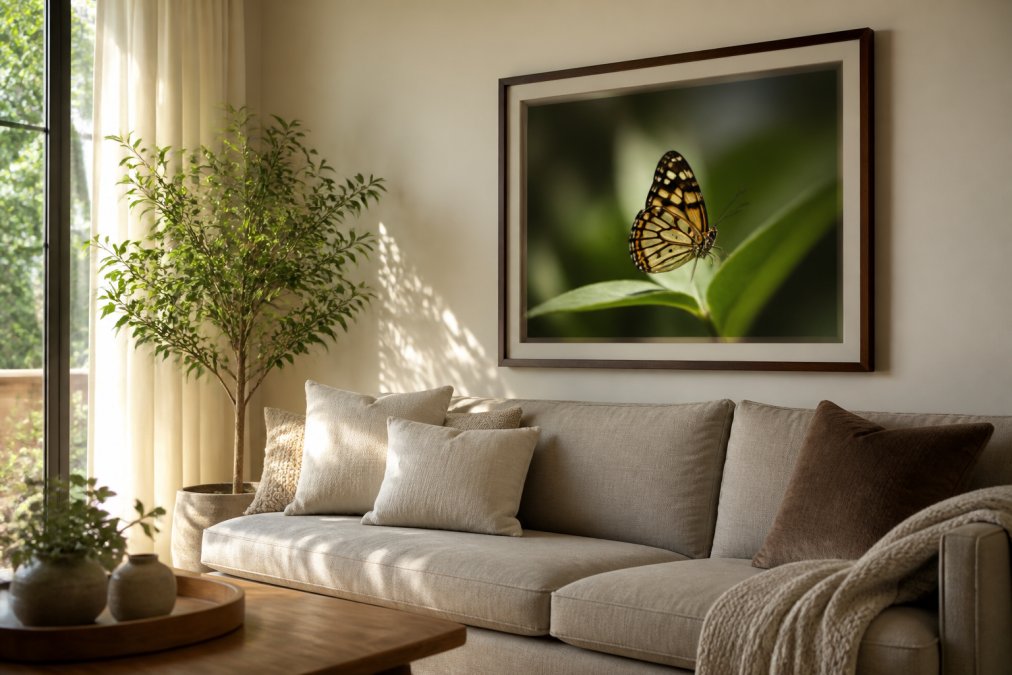
Keeper of the Branch: Stillness for Meditation Spaces
In a culture that celebrates constant movement, this butterfly perched quietly on its branch offers a different perspective. Keeper of the Branch is an original fine-art butterfly photograph celebrating stillness and quiet wisdom, priced at $59.38. It creates a calming focal point for a home office or meditation room, reminding viewers that observation is its own form of wisdom.
The Work of Light: Optimism for Living Rooms and Entryways
The sunflower's lifted face gives this image a sense of devotion. The Work of Light celebrates hope and purpose, with the bloom standing beneath an open sky, fully turned toward what nourishes it. At $69.99, this piece brings optimism and grounding into living rooms, entryways, and offices. It is about choosing direction, even when the path has not yet revealed every step.
Night Tide: Depth for Bedrooms and Reflective Corners
Night Tide is an original fine-art landscape photograph that honors the beauty of in-between hours. The shoreline glows beneath a dark sky, with soft currents and a distant light creating a moment between uncertainty and illumination. Priced at $69.99, it brings depth and cinematic atmosphere to bedrooms and meditation spaces.
How to Choose Photography Prints for Home Decor
Selecting the right piece is less about picking a pretty picture and more about understanding the visual and emotional job you want that wall to do. Treat the print as a design element, not just a standalone object. Here is a practical framework for integrating fine art nature photography into your home.
Step 1: Define the Room's Visual Energy
Before you start browsing, identify the dominant energy of the room. Is it a high-energy gathering space, a calm and restorative retreat, or a creative hub? Your art should amplify that energy, not fight it.
- For a minimalist or modern space with clean lines and neutral tones, look for prints with strong graphic elements. A high-contrast black-and-white botanical like Shadow Petals adds visual interest and a sense of structure without introducing visual clutter. The negative space in the image echoes the negative space in the room.
- For a rustic, farmhouse, or traditional interior with natural wood and warm textures, a matte canvas print of a landscape like The Green Passage reinforces the organic feel. The textured canvas surface complements the tactile nature of the room's furnishings.
- For a bohemian or eclectic space with layered patterns and global accents, a vibrant floral like Unapologetic Bloom provides a rich, colorful anchor that ties the diverse elements together.
Step 2: Master the Art of Scale and Proportion
A common mistake is buying a print that is too small for the wall. As a general rule, the width of your art should be between 60% and 75% of the width of the furniture it hangs above (architecturaldigest.com). For a large, empty wall, a single large-format print makes a bold statement, or a series of smaller related prints can create a cohesive gallery wall. When in doubt, err on the side of going larger, oversized art creates drama and luxury, while undersized art makes a room feel unfinished.
Step 3: Create a Dialogue with Existing Decor
Your print should not just match your sofa; it should converse with it. Look for a secondary color in the photograph that you can pull into a throw pillow, a rug, or a vase. For instance, the deep greens in The Inward Spiral can be echoed with a velvet cushion or a potted fern, creating a cohesive color story.
Step 4: Consider the Visual Weight and Flow
Think about how the eye travels through the room. A piece with a strong central focal point, like Keeper of the Branch, is perfect for a meditation corner. A piece with a strong horizontal line, like the shoreline in Night Tide, can ground a room and make a narrow space feel wider. Place art at eye level in most rooms, and slightly higher above a fireplace or tall furniture.

Best Paper Types for Fine Art Prints and Other Formats
The best paper types for fine art prints preserve the depth and emotion of the original photograph. Museum-grade matte paper is designed to resist fading. Matte canvas offers a textured, painterly feel. Acrylic glass prints enhance color and luminosity for a gallery-inspired finish. Aluminum dibond prints provide a sleek, contemporary look with exceptional durability.
| Print Format | Best For | Key Quality |
|---|---|---|
| Fine Art Paper (Unframed) | Meditation spaces, reading corners | Archival matte finish, pigment-based inks |
| Matte Canvas (Unframed) | Living rooms, cozy interiors | Textured, painterly warmth |
| Acrylic Glass Print | Modern, gallery-style rooms | Enhanced color and luminosity |
| Aluminum Dibond Print | Offices, high-light areas | Sleek, durable, UV protection |
Each format uses pigment-based inks and archival materials. When choosing, consider the room's lighting and your aesthetic. A piece like The Inward Spiral on acrylic can offer a meditative pulse, while the same image on canvas can feel softer and more organic. Match the medium to the mood you want to create.

Where Each Fine Art Nature Print Shines
Different rooms ask for different energies. Fernlight, which celebrates patience and growth, is ideal for healing rooms and sacred corners. The Green Passage, a landscape of a soft path inviting you forward, brings grounding energy to entryways and thresholds. For a creative studio, Golden Curiosity, with its folded petals and warm golden tones, invites wonder. The Inward Spiral, a botanical leaf curling toward its own center, is perfect for bedrooms and reflective corners, reminding you that turning inward is not the same as standing still.
A Quiet Landing, a butterfly settled naturally upon a leaf, celebrates peace and belonging, making it a gentle companion for bedrooms and reading corners. For a modern, minimalist space, Shadow Petals transforms familiar petals into a striking black and white composition. The key is to let the art's story meet the room's function, creating a sanctuary where you can rest and heal.
Caring for Your Fine Art Nature Photography Prints
Proper care is about understanding how light and environment interact with your print. While all Magick Brush prints use archival materials, the way you light and display your art is a significant factor in its long-term appearance.
The Critical Role of Lighting
Light is both the source of a photograph's magic and the greatest potential threat to its longevity. Here’s how to display your art with light that flatters it without damaging it.
- Avoid Direct Sunlight: This is the most important rule. Prolonged, direct sunlight can cause pigment fading over time. The sun's ultraviolet (UV) rays are a primary culprit. Avoid hanging a print on a wall that receives strong, direct sun for extended periods.
- Choose the Right Lightbulbs: When using artificial lighting, the type of bulb matters. Standard incandescent and halogen bulbs emit a significant amount of UV radiation and heat. Switch to LED spotlights or track lighting, which emit almost no UV and very little heat.
- Understand Color Rendering (CRI): To see your print's colors as the artist intended, you need a light source with a high Color Rendering Index (CRI). CRI measures a light source's ability to reveal the true colors of an object compared to natural sunlight. A CRI of 90 or above is considered excellent for art display (energy.gov). Look for LED bulbs labeled with a CRI of 90+.
- Minimize Glare: Glare is the enemy of viewing enjoyment. Position picture lights or track lighting at a 30-degree angle to the print's surface. This minimizes reflection and ensures the light washes over the image evenly. For glass-fronted frames, consider using non-reflective or museum-grade glass, which can reduce glare and provide UV protection.
Environmental Control: Temperature and Humidity
Fluctuations in temperature and humidity can cause paper to expand and contract, leading to warping, buckling, or even mold growth.
- Ideal Conditions: Aim for a stable, moderate environment similar to what you find comfortable. A relative humidity level between 40% and 50% is ideal (loc.gov). Avoid hanging prints in bathrooms, kitchens, or other areas where humidity and temperature swing dramatically.
- Location Matters: Do not hang prints directly above a heat register, fireplace, or air conditioning vent. The constant flow of dry or hot air can dry out the paper and make it brittle over time.
Cleaning and Handling Best Practices
- Dusting: Use a soft, dry microfiber cloth to gently dust the frame or acrylic surface weekly. For canvas prints, use a soft brush attachment on your vacuum cleaner on a low setting, or a dry, lint-free cloth.
- Cleaning Solutions: Never spray water or any cleaning solution directly onto the print or acrylic surface. If a deeper clean is needed, lightly dampen a microfiber cloth with distilled water and gently wipe the surface, then immediately dry it with a separate soft cloth. For stubborn smudges on acrylic, use a specialized acrylic cleaner designed for that material.
- Handling: Always handle unframed prints by the edges with clean, dry hands, or better yet, wear cotton gloves. The natural oils on your skin can leave permanent marks on the paper surface.
By understanding the science of light and environment, you can display your fine art nature photography prints in a way that helps preserve them and allows them to remain a source of daily inspiration.
Bring Lasting Calm Into Your Space
Choosing art is a personal journey, and the right fine art nature photography prints can transform a house into a sanctuary. Magick Brush offers a curated collection that blends nature, intuition, and emotional presence, created by Erin D'Elia to bring calm and meaning into your environment. Each print is customizable in size and format, from archival paper to aluminum dibond. Giving the gift of art for the holidays or a celebration is the new cool thing, and a piece like Night Tide or The Work of Light makes a thoughtful present for nature lovers and mystics alike. Explore the collection and find the visual anchor that invites you to breathe, rest, and become the next version of yourself.

Frequently Asked Questions
What defines fine art nature photography?
Fine art nature photography goes beyond capturing a scene. It is created with a specific artistic vision, where the photographer uses light, composition, and subject to convey emotion or a story. Unlike stock photos, these prints are often limited or original works made with archival-quality materials. The goal is to bring a sense of intention and beauty into a space, transforming a room into a more personal and reflective environment.
How do I choose the right size for my wall?
A good rule is that the print should cover roughly two-thirds to three-quarters of the width of your furniture, like a sofa or bed. For a large empty wall, a single oversized piece creates a bold focal point. For smaller spaces, a medium print paired with other elements works well. Measure your wall space first and consider the viewing distance. Prints from Magick Brush come in multiple sizes to fit different rooms.
What is the difference between canvas and metal fine art prints?
A matte canvas print offers a textured, painterly feel that adds warmth, making it ideal for cozy spaces. An aluminum dibond print provides a sleek, modern look with exceptional durability and vibrant color. Acrylic glass prints enhance depth and luminosity for a gallery finish. Your choice depends on your decor style: canvas for softness, metal for a contemporary edge, and acrylic for maximum color brilliance.
How should I care for fine art photography prints?
To ensure longevity, hang your print away from direct sunlight to prevent fading. Use UV-protective glass or acrylic if you choose a framed option. Dust the frame or surface gently with a soft, dry cloth. Avoid using water or cleaning chemicals directly on the print. With proper care, museum-quality archival prints can maintain their color and detail.