

How to Choose Art for Healing: A Step-by-Step Guide
Table of Contents
- Step 1: Assess Your Emotional Response and Intention
- Step 2: Understand Color Psychology in Healing Spaces
- Step 3: Explore Nature-Inspired Imagery and Motifs
- The Benefits of Nature Photography for Mental Health
- Step 4: How to Create a Calming Environment with Art
- Selecting Therapeutic Wall Art for Home
- Common Mistakes to Avoid When Choosing Art for Healing
- Frequently Asked Questions
Last Updated: September 27, 2026
Step 1: Assess Your Emotional Response and Intention
The first step in learning how to choose art for healing is understanding what draws you emotionally. Before you buy anything, sit with a piece and notice what happens inside. Does it calm your nervous system? Does it spark curiosity? Does it feel like a mirror reflecting something you need to see?
At Magick Brush, each piece is created with emotional presence and healing purpose. When you choose art for healing, you're selecting a visual anchor that supports your well-being daily.
Start by asking yourself: What do I need right now? Are you seeking calm after a chaotic week? Do you need a reminder of growth and resilience? Are you grieving and need permission to sit with that? Your answer shapes everything that follows.
Step 2: Understand Color Psychology in Healing Spaces
Color is the fastest language your nervous system speaks. Understanding how it affects healing requires looking at both neuroscience and individual differences, what calms one person may overstimulate another.
The Neuroscience of Color and the Nervous System
Your brain processes color through multiple pathways. Blue-wavelength light suppresses melatonin and promotes morning alertness, while warmer wavelengths support evening sleep (Checking your browser). In healing spaces, time of day and light source matter as much as color itself.
Blues and greens activate the parasympathetic nervous system because humans evolved in environments where water and vegetation signaled safety. Soft greens create growth and renewal without overstimulation.
Warm earth tones, terracotta, ochre, soft browns, ground you by triggering associations with soil, stone, and stability. These colors activate different neural pathways than cool tones; they're processed more quickly by the visual cortex and create a sense of being held or anchored to the physical world.
Jewel tones like deep purples or teal can work in healing spaces when paired with calming neutrals, so they support rather than demand active visual processing.
Individual Variation and Sensory Sensitivities
Not everyone's nervous system responds the same way to color. People with sensory processing sensitivities, autism spectrum traits, or anxiety disorders often experience color differently. Bright, saturated colors that energize one person can trigger sensory overload in another.
If you're neurodivergent or have sensory sensitivities, notice whether a color feels restful or demanding. Desaturated versions, dusty blue, sage green, often feel more accessible than saturated hues.
Cultural and Personal Associations
Color meaning is not universal. Your personal history with a color, a beloved grandparent, a traumatic event, a meaningful place, always overrides generic color psychology.
Choose art where the color palette matches the feeling you're seeking in your body, not in theory. If it doesn't feel right when you sit with it, it's not the right piece.
Step 3: Explore Nature-Inspired Imagery and Motifs
Nature-inspired imagery works for healing because your nervous system recognizes it as safe. When you see foliage, flowing water, or botanical growth, something ancient in you relaxes.
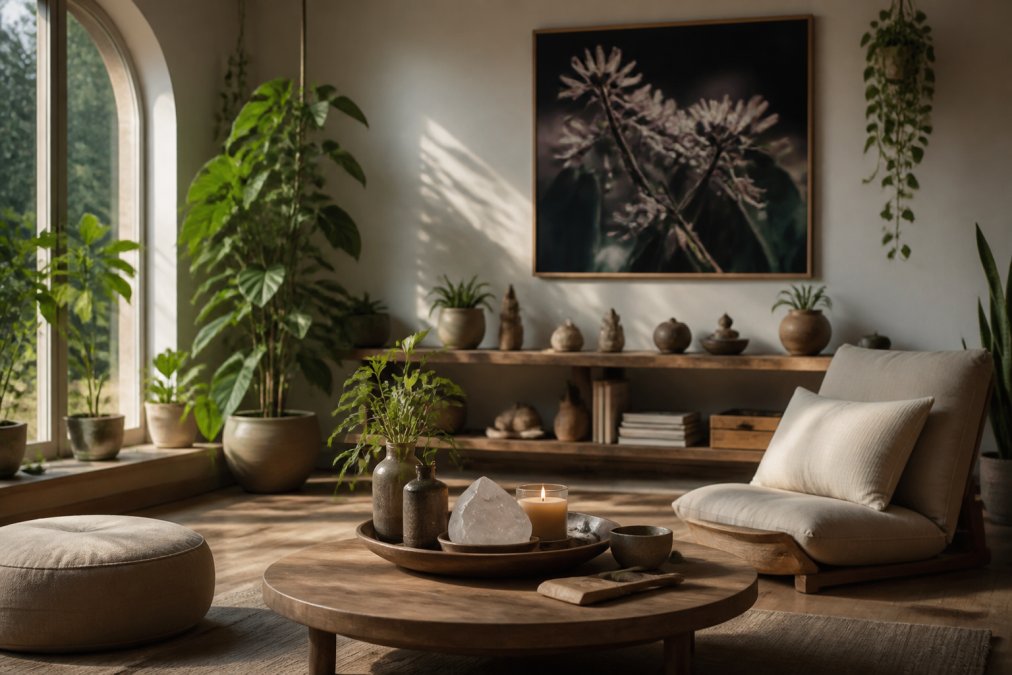
Botanical imagery speaks to growth and resilience. A single unfurling frond carries the message that transformation happens slowly. Fernlight celebrates patience and gradual becoming.

Water imagery creates flow and release, inviting your nervous system to let go.
Butterfly imagery carries symbolism of transformation and rest. Monarch's Pause reminds us that rest is part of the sacred cycle.
Trees and forest scenes ground us, suggesting stability and deep roots. A forest in art creates psychological safety.
The key is choosing motifs that match your healing intention. If you're processing grief, flowing water might serve you. If you're building confidence after loss, butterfly imagery or botanical growth could be your anchor.
The Benefits of Nature Photography for Mental Health
Nature photography for mental health works because it bridges the gap between the healing power of direct nature exposure and the spaces where most people actually spend their time. You can't always access a forest or a meadow, but you can live with one on your wall, and research on visual perception suggests that your nervous system responds to photorealistic nature imagery in measurable ways.
How the Brain Processes Photorealistic Imagery
When you look at realistic nature photography, your visual cortex recognizes concrete elements: water, light, growth, botanical forms. This triggers "soft fascination", your attention is naturally drawn without requiring active cognitive effort.
Nature imagery naturally draws your gaze and holds it in a relaxed state. Your brain processes it through the same pathways it would use in an actual natural environment, making nature photography function like a window to calm.
Photorealistic imagery bypasses the interpretive layer that abstract art requires. With a photograph of a specific fern in a specific moment of light, there's nothing to decode, just recognition and rest.
The Role of Artist Intention and Presence
Fine-art nature photography created with intention functions differently than generic stock images. When a photographer approaches their work with mindfulness, that presence becomes embedded in the image. Viewers can detect and respond to the artist's intentionality, even subconsciously.
A photograph of a specific fern in a specific moment of light carries more healing power than a generic image. Your nervous system recognizes authenticity.
When Photorealism May Not Be the Right Choice
While nature photography works for many people, some find it too literal or demanding. Stylized or semi-abstract interpretations of nature may feel more accessible.
If you have a complicated relationship with a natural environment, photorealistic depictions might trigger rather than soothe. Abstract nature-inspired work or botanical illustration may serve you better.
Match the form of art to your nervous system's actual response. If photorealistic nature photography feels grounding and calming, it's right. If not, explore other approaches to nature-inspired healing art.
Step 4: How to Create a Calming Environment with Art
Creating a calming environment with art requires thinking about how pieces work together and interact with your space.
Start with one focal point, the piece that anchors the room energetically and sets the tone for everything else.
Consider balance and avoid overcrowding. In healing spaces, negative space matters as much as the art itself.
Think about sight lines. Where do you naturally rest your eyes when you're sitting in this space? When you're lying down? When you're at your desk? Your art should meet you where your eyes naturally go.
Lighting transforms everything. Art in soft, diffused light feels intimate and calming. Art in harsh overhead light can feel clinical. If possible, position pieces where they catch natural light, or consider adding soft, warm lighting that honors the work.
Selecting Therapeutic Wall Art for Home
When you're selecting therapeutic wall art for your home, you're making a commitment to yourself. This piece will be part of your daily visual landscape. It will influence your nervous system every time you see it.
Start by identifying the room's purpose. A bedroom needs different energy than a home office. A meditation corner needs different support than an entryway.
For bedrooms, choose imagery that invites rest and release. Water, soft florals, or images of gentle growth work beautifully. Avoid pieces that demand active interpretation or carry heavy emotional weight.
For home offices, choose art that grounds you without making you sleepy. Nature imagery that suggests stability, trees, earth tones, structured botanical forms, helps you stay present and focused while maintaining calm.
For meditation or yoga spaces, choose pieces that invite stillness. Single subjects, clear focal points, and minimal visual complexity work best. The art should fade into the background of your practice, not compete with it.
Consider the size carefully.
Common Mistakes to Avoid When Choosing Art for Healing
The biggest mistake people make is choosing art they think they should like rather than art that actually moves them. A piece can be objectively beautiful and still be wrong for your healing. Trust your body. If it doesn't feel right, it's not right.
Frequently Asked Questions
What kind of art is best for healing?
Nature-inspired artwork, particularly botanical and wildlife photography, creates the most therapeutic effect. Art that evokes calm, growth, and connection to natural elements supports emotional well-being and stress reduction. Realistic nature imagery tends to be more grounding than abstract pieces, though personal resonance matters most. Look for work that invites a deeper breath and sense of presence when you view it.
How does art affect mental health in a home environment?
Intentional artwork in your home influences your nervous system and emotional state throughout the day. Nature-based imagery reduces visual stress and invites mindfulness. The right focal point in a room anchors your attention and creates spatial openness, supporting mental clarity. Art that resonates emotionally can serve as a visual anchor for your healing journey, reminding you of your intentions and values.
Can nature photography help with stress reduction?
Yes. Nature photography activates biophilic design principles, our natural human connection to the living world. Viewing images of verdant foliage, botanical subjects, and natural landscapes triggers the parasympathetic nervous system, lowering cortisol and promoting calm. The sensory experience of quality nature photography in your space provides ongoing visual nourishment that supports mental health and emotional resilience.
How do I know if a piece will feel calming when it arrives?
Spend time studying the image online before purchasing. Notice your breath, body sensation, and emotional response. Does it invite calm or tension? Does it feel grounded and intentional? Read the artist's story behind the piece, understanding the intention and creation process deepens your connection. Consider how the imagery aligns with your healing goals and existing decor. Choose formats like acrylic glass or canvas that enhance color and depth for maximum visual impact.