

How to Create a Home Sanctuary: A 2026 Guide
Table of Contents
- What Makes a Home Sanctuary?
- Step 1: Define Your Sanctuary Space
- Step 2: Declutter to Clear Your Mind
- Step 3: Mindful Home Decor Choices
- Step 4: Creating a Calming Environment With Light and Nature
- Step 5: Design a Self-Care Corner
- Step 6: Choose Art for Emotional Well-Being
- Step 7: Engage Your Senses for a Deeper Retreat
- Frequently Asked Questions
Last Updated: September 7, 2026
A home sanctuary is a dedicated space designed to support mental rest, emotional balance, and intentional living. Creating one doesn't require a renovation budget or a spare room; it requires a shift in how you see your home environment. This guide walks through seven practical steps to transform any corner of your dwelling into a personal retreat.
The process is less about buying new things and more about making deliberate choices. A sanctuary can begin with a single chair, a piece of art, or a cleared windowsill. Below, we'll show you exactly how to build a space that invites a deeper breath, starting with the mental shift that makes the physical changes stick.
What Makes a Home Sanctuary?
A home sanctuary is any area that signals safety, calm, and presence to your nervous system the moment you enter it. Unlike the rest of a home, which serves productivity or socializing, a sanctuary serves restoration.
The key distinction is intention. A room becomes a sanctuary not because of its size or cost, but because every object within it was chosen to support a calming environment. This aligns with principles of intentional living, where your surroundings reflect your values rather than your habits.
Step 1: Define Your Sanctuary Space
Start by choosing a physical boundary, even if it's just a single armchair or a window seat. Walk through your home and look for an area that receives natural light, has an electrical outlet if needed, and is away from high-traffic pathways. A corner of your bedroom often works better than a living room spot because it already carries associations with rest.
Once you select the spot, commit to its purpose. This is not where you check email, pay bills, or take work calls. The brain needs clear cues: when you sit here, you are in retreat mode.
Designing for Small or Shared Spaces
Living in a small apartment or sharing a home with others does not disqualify you from having a sanctuary. The solution lies in portability and visual separation. A rolling cart with your tea, journal, and a small plant can define your space in a studio.
For shared spaces, communication matters as much as design. Agree on times when the corner is yours, or use a visual signal like a closed curtain to indicate you are not to be disturbed.
Step 2: Declutter to Clear Your Mind
Clutter is the enemy of a calming environment because visual noise keeps your mind running. Research in environmental psychology, such as work cited by the American Psychological Association, has long linked physical clutter to increased stress and difficulty focusing. Decluttering is not about achieving minimalism for its own sake; it is about removing distractions so your space can communicate rest.
Work in one small zone at a time. Remove everything from your chosen surface, then return only items that serve the sanctuary's purpose: a book you're reading, a journal, a single meaningful object. Leave at least half of your surfaces visibly clear.
Step 3: Mindful Home Decor Choices
Mindful home decor means selecting objects that hold meaning rather than items that merely fill space. Before bringing anything into your sanctuary, ask whether it invites a deeper breath or adds background chatter. Every piece should earn its place by supporting your emotional state.
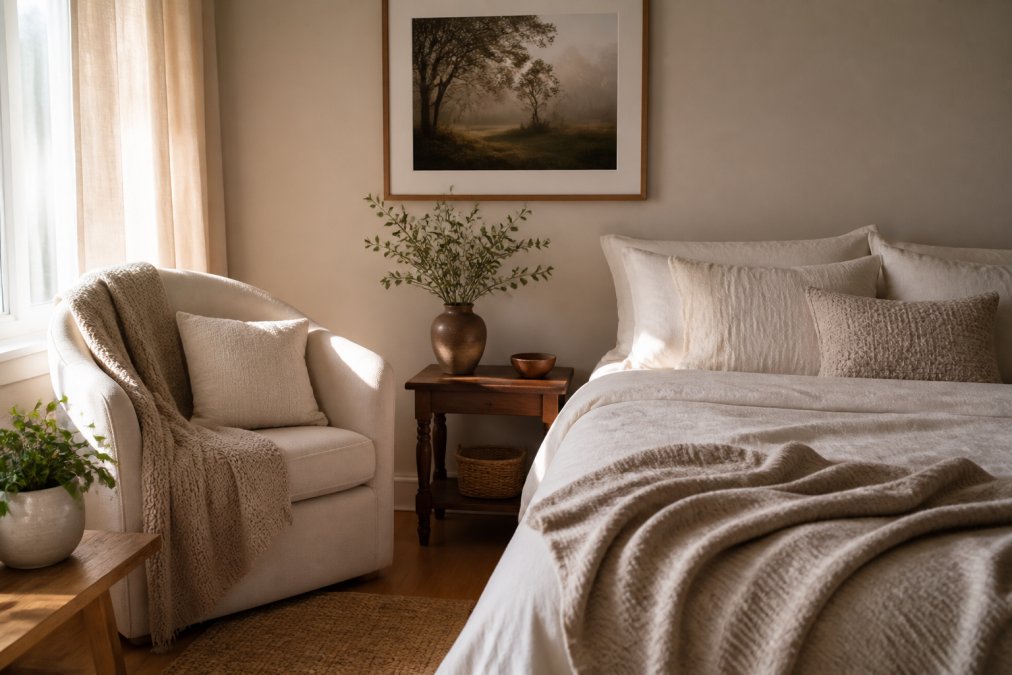
Textural variety is a quiet but powerful tool. A chunky knit throw, a smooth stone, a linen cushion: these tactile differences give your hands and body something to anchor to. When you choose art, look for pieces that depict natural scenes or open spaces, as they tend to create a sense of expansiveness rather than confinement.
Choosing a Calming Color Palette
Color psychology suggests that cool tones like sage green, dusty blue, and warm neutrals like cream and taupe lower heart rate and promote relaxation. Introduce your palette through textiles, ceramics, and art. A single framed piece featuring earthy tones can pull a whole corner together.
If you prefer deeper hues, use them sparingly. A dark accent wall behind your reading chair can feel cocooning rather than heavy, provided the rest of the space stays light.
Step 4: Creating a Calming Environment With Light and Nature
A calming environment depends heavily on managing light levels. Harsh overhead lighting signals alertness, while soft, layered light signals safety. In the evening, rely on warm, low-wattage lamps rather than overhead fixtures.
The Role of Natural Light and Biophilic Design
Maximize whatever natural light you have. Keep windowsills clear of clutter, and use sheer curtains to diffuse harsh midday sun. Biophilic design, which connects interior spaces to nature, is a core strategy for wellness at home. The presence of natural elements has been shown to lower stress markers, a finding documented in research published by the National Institutes of Health.
Bringing nature inside goes beyond plants. A vase of fresh branches, a bowl of pinecones, or a photograph of a forest floor all satisfy the same instinct. For spaces with low light, high-quality nature photography offers the visual benefit of greenery without the maintenance.
Step 5: Design a Self-Care Corner
A self-care corner is more than a decorated nook; it is a behavioral trigger. The goal is to lower the friction between deciding to rest and actually resting.
Start with the seat. A supportive chair or floor cushion with back support is non-negotiable. If you meditate, a zafu or a firm bolster elevates your hips and keeps your spine aligned. The physical setup should make the posture of rest feel effortless.
The Ritual Layer
A self-care corner only works if it is paired with a ritual. Without one, it is just furniture. The ritual can be as short as two minutes, but it must be consistent. A common pattern is to sit in the same seat at the same time each day, light a candle or a stick of incense, and take five slow breaths before you begin any activity.
Stock the corner with tools that support one or two specific practices, not a pile of options. A journal and a pen, a water glass, and a single book you are actually reading. Too many choices create decision fatigue, which defeats the purpose of the space.
For Renters and Shared Homes
If you cannot dedicate a permanent corner, build a portable ritual kit. A small basket or a cloth bag that holds your journal, a candle, and a folded blanket can be stored in a closet and brought out when you need it. The act of unpacking the kit becomes the first step of your ritual.
Measuring What Works
After two weeks, check in with yourself. Are you actually using the corner? If not, the problem is usually one of three things: the seat is uncomfortable, the ritual is too long, or the space is too exposed to household traffic. Adjust one variable at a time. The space should evolve based on what your body tells you, not on an aesthetic ideal.
Step 6: Choose Art for Emotional Well-Being
Art for emotional well-being is not about matching your sofa; it is about choosing images that speak to your inner state. The right piece acts as a visual anchor, giving your eyes a place to rest and your mind a prompt toward a specific feeling.
Selecting Pieces That Resonate With You
Look for art that depicts the feeling you want to cultivate, not just a scene you find pretty. A stormy ocean might be beautiful, but it may not calm you. A soft-focus image of a bloom or a quiet shoreline might serve your sanctuary better.
The scale of the art matters. A large piece can anchor an entire wall and become the focal point of the room. Smaller pieces work well in groupings or on narrow shelves. When you find a piece that resonates, it can invite a sense of ease when you look at it.
Step 7: Engage Your Senses for a Deeper Retreat
The final layer of a sanctuary is sensory, moving beyond the visual to include scent, sound, and touch. This multisensory approach is what separates a decorated room from a therapeutic environment.
Introduce scent with a diffuser or a natural candle in a grounding fragrance like cedar, lavender, or sandalwood. Sound can be managed with a small white-noise machine or a playlist of ambient tracks. The tactile layer is already in place through your textiles, but consider adding a weighted blanket if deep pressure calms you. According to guidance from the Centers for Disease Control and Prevention, consistent relaxation practices are a key component of overall stress management, and a dedicated space makes that practice easier to maintain.
The Missing Sense: Digital Silence
There is one sensory input that most sanctuary guides ignore, and it is the most disruptive of all: the sound of a notification, the glow of a screen, the vibration of a phone on a table. A true sanctuary requires a digital detox protocol, not just a suggestion to put the phone away.
Start with a physical boundary. Designate a charging station outside the sanctuary space, ideally in a kitchen or hallway. The phone should be out of sight and out of earshot, not face-down on the side table where it can still buzz.
The 30-Minute Tech-Free Window
A practical protocol is to establish a 30-minute tech-free window before you enter your sanctuary. Research on attention residue shows that your brain continues to process unfinished tasks even after you stop working. The 30-minute buffer allows your mental background processes to settle.
During this window, do not scroll, watch, or read anything on a screen. Instead, do a low-effort physical task: wash the dishes, fold laundry, or take a short walk around the block. By the time you sit down in your sanctuary, your brain has already shifted gears.
Sound and Scent as Digital Substitutes
The reason scent and sound work so well is that they occupy the same sensory channels that digital media normally hijacks. Replacing alerts with a consistent ambient sound gives your auditory system a steady, predictable pattern. A grounding scent like cedar or lavender is a novel input that draws your attention to the present moment.
A common pattern among people who successfully maintain a sanctuary is to pair a specific scent with the tech-free window. Light the candle when you put the phone down. Your brain will begin to associate that fragrance with the transition into rest, making the ritual stronger over time.
Frequently Asked Questions
Can your home be a sanctuary?
Yes, any home can become a sanctuary with intentional choices. You don't need a large house or a separate room. Start by designating a specific corner or nook for quiet reflection. Focus on decluttering that area and adding elements that signal calm to your senses, such as soft lighting, comfortable textures, and meaningful art. The goal is to create a dedicated space that feels distinct from the rest of your daily activities, helping your mind shift into a restful state.
How to create a sanctuary space on a budget?
Creating a sanctuary doesn't require a big budget. Begin by decluttering and rearranging furniture you already own to define a new area. Use items like plants, candles, or a soft throw blanket to add warmth. When choosing wall art, look for affordable fine-art prints that resonate with you personally. Mindful home decor is about intention, not expense. Focus on a few quality pieces that support your goal of creating a calming environment, rather than filling the space with many objects.
What are the essential elements of a home sanctuary?
Essential elements typically include a designated space for rest, a decluttered surface, and a comfortable place to sit. To build a calming environment, incorporate soft ambient lighting, natural elements like plants or wood, and textural variety through pillows or rugs. Choosing art for emotional well-being is also key; a piece that depicts nature or evokes a peaceful feeling can anchor the room. Finally, limit digital distractions to preserve the quiet atmosphere you are cultivating.
What makes a house a sanctuary house?
A house becomes a sanctuary when it supports your mental and emotional health. This goes beyond decor to how the space makes you feel. A sanctuary house has areas designed for specific restorative activities, like reading or meditating, and is free from visual clutter that adds stress. It incorporates elements that promote a sensory experience of calm, such as natural light, quiet colors, and personal objects. The overall goal is to create a peaceful retreat that feels like a true refuge from the outside world.