

Jess Lee vs Aaron Reed Photography: A Comparison
Table of Contents
- Understanding the Two Photographers: Style and Vision
- Fine Art Landscape Photography Prints: What Sets Them Apart
- Professional Experience and Portfolio Depth
- Photography Workshops and Educational Offerings
- How to Choose Wall Art for Home: A Practical Framework
- Print Quality, Materials, and Presentation
- Which Photographer Aligns With Your Vision
- Frequently Asked Questions
Last Updated: September 18, 2026
Understanding the Two Photographers: Style and Vision
When comparing Jess Lee vs Aaron Reed photography, you're looking at two distinct approaches to capturing the natural world. Both photographers have built devoted followings through their commitment to fine art landscape and nature work, yet their artistic philosophies and technical execution differ in meaningful ways.
Jess Lee's work emphasizes intimate moments within larger landscapes. Her compositions often isolate small details, a shaft of light through trees, the texture of weathered bark, the subtle color shifts in a canyon wall. This approach creates a meditative quality that invites viewers to slow down and notice what they might otherwise miss.
Aaron Reed, by contrast, tends toward expansive, dramatic compositions. His large format prints capture sweeping vistas and bold environmental moments. Where Lee draws you into quiet observation, Reed's work commands presence through scale and visual drama.
Both photographers share a commitment to environmental consciousness and use their work to advocate for conservation. This shared value resonates strongly with collectors who want their wall art to reflect their commitment to protecting wild places.
Fine Art Landscape Photography Prints: What Sets Them Apart
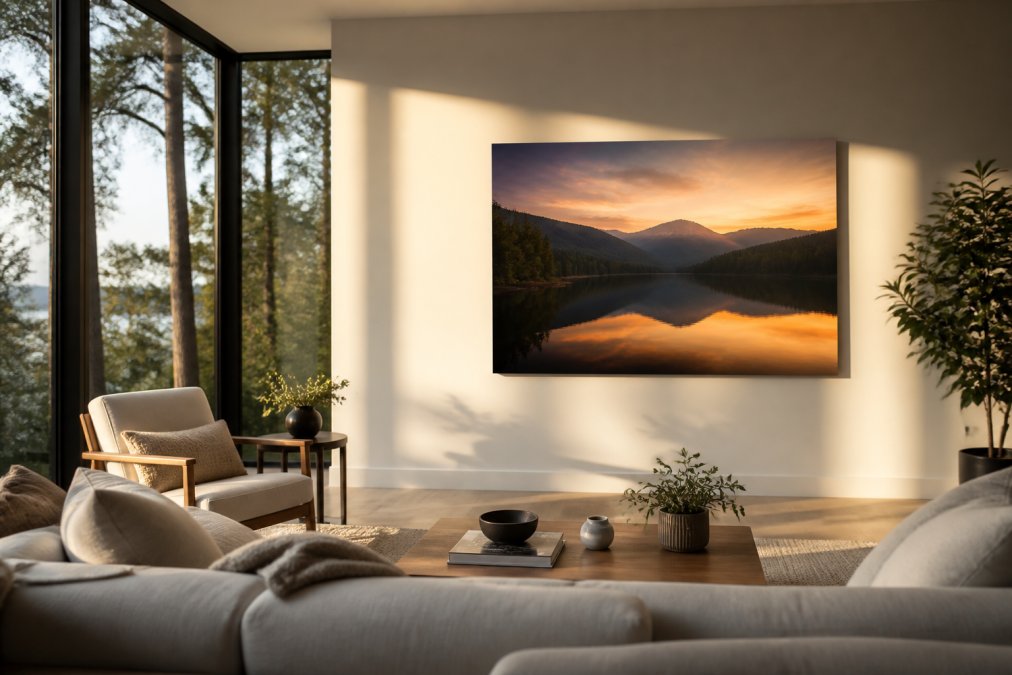
The difference between mass-produced photography and fine art prints comes down to intentionality. Both Jess Lee and Aaron Reed create limited edition prints designed to be living presences in your space, not decorative afterthoughts.
Jess Lee's prints often emphasize color subtlety and emotional restraint. Her palette tends toward muted earth tones, soft greens, and gentle light. These works function beautifully in spaces where calm and introspection matter, meditation rooms, home offices, bedrooms. They soften a room and anchor the eye without demanding attention.
Aaron Reed's prints bring visual energy and dramatic presence. His use of contrast, scale, and bold natural moments creates images that command a wall. These work well in spaces where you want art to be a conversation starter or a focal point that energizes the environment.
When choosing between them for your space, consider what emotional response you want. Lee's work invites deeper breath and presence. Reed's work inspires awe and wonder. Neither is objectively better, the choice depends on how you want your environment to feel and what kind of visual story you want to live with daily.
Professional Experience and Portfolio Depth
Both photographers bring substantial professional credentials, but their technical foundations and field methodologies differ in ways that directly affect the final print.
Jess Lee's career has centered on field observation across diverse ecosystems, from macro work in forest understory to large-scale landscape documentation. Her technical approach emphasizes in-camera composition and precise exposure metering, which means she often works with natural light constraints and builds her vision through careful framing rather than post-processing manipulation. This discipline translates to prints where color and tone feel inherent to the scene rather than enhanced. Her portfolio depth spans multiple continents and seasons, demonstrating how her compositional philosophy adapts across radically different lighting conditions.
Aaron Reed's professional trajectory has been anchored in large format film and digital capture, a technical choice that requires fundamentally different workflow discipline. Large format photography demands precise pre-visualization, you cannot shoot hundreds of frames and select the best one. Every exposure is deliberate. This constraint shapes his entire approach: his compositions are engineered for maximum visual impact at scale, his color grading is calibrated for how pigment-based inks render on museum-grade papers, and his post-processing workflow prioritizes tonal separation and dynamic range preservation. His portfolio reflects this technical rigor, with images that hold detail and clarity even when enlarged to 40+ inches.
The practical difference: Lee's prints excel at revealing detail and nuance the longer you look at them. Reed's prints command immediate visual presence and maintain impact from across a room. Both approaches require deep technical knowledge, but they solve different problems. Lee's workflow optimizes for sustained engagement; Reed's optimizes for visual authority.
When evaluating fine art prints from any photographer, ask: Does the portfolio show consistent technical execution across varied conditions? Do the images hold up to enlargement without degradation? Can you see evidence of intentional craft in how light, color, and composition work together? Both of these photographers demonstrate mastery at this level, but through different technical languages.
Photography Workshops and Educational Offerings
Both photographers offer instruction, but their workshop structures and curricula reflect their distinct technical philosophies and target audiences.
Jess Lee's workshops typically emphasize field observation, composition fundamentals, and what she calls "visual presence", the practice of slowing down to notice light, color relationships, and compositional geometry before pressing the shutter. Her sessions often span multiple days in a single location, allowing students to photograph the same landscape across different light conditions and times of day. This extended timeframe teaches how light transforms a scene and how the same composition yields different emotional impact depending on when and how you capture it. Her curriculum includes technical foundations (exposure, metering, depth of field) but frames them as tools for seeing rather than ends in themselves. Students report that her teaching shifts how they approach photography long after the workshop ends.
Aaron Reed's workshops take a different structural approach. His sessions typically focus on large format technique, environmental portraiture, and the business fundamentals of sustaining a fine art photography practice. A typical Reed workshop might include hands-on instruction with large format cameras (understanding bellows, movements, and film holders), post-processing workflows optimized for fine art printing, and practical modules on pricing, licensing, and building a collector base. His teaching assumes students want not just to make beautiful images but to understand the complete chain from capture through sale. He often includes case studies of his own work, how a specific image was conceived, shot, processed, printed, and ultimately sold to a collector.
The pedagogical difference matters: Lee's workshops develop your eye and your relationship with the natural world. Reed's workshops develop your technical mastery and your ability to build a sustainable creative business. Neither approach is more valuable; they serve different career stages and goals.
For someone early in their photography journey, Lee's emphasis on observation and presence builds foundational seeing skills that transfer across any photographic genre. For someone already technically competent but struggling to turn their work into a viable practice, Reed's business and workflow modules address the gap between making good images and making a living from them.
Both photographers use their teaching to build community. This matters because it creates ongoing connection with students and collectors who become invested in their artistic journey and often become long-term patrons of their work.
How to Choose Wall Art for Home: A Practical Framework
Selecting fine art photography for your space requires clarity about three things: the room's purpose, your emotional response to the image, and practical considerations like size and framing.
Room purpose shapes everything. A meditation space or bedroom calls for different energy than a home office or living room. Lee's quieter work suits contemplative spaces. Reed's dramatic compositions energize gathering spaces or offices where you want visual inspiration.
Emotional resonance matters more than technical perfection. You'll live with this image daily. If it doesn't create a feeling you want to return to, the artist's credentials won't matter. Spend time with images before purchasing. Notice what draws your eye and what feeling arises.
Size and placement affect impact. A small print functions as a detail. A large print becomes a focal point. Consider your wall space, lighting, and what you want the artwork to do in the room. Professional photographers like Lee and Reed design their work to work at scale, their compositions hold up to enlargement in ways that casual photography doesn't.
Consider the frame and presentation. How artwork is presented affects how it's perceived.
Print Quality, Materials, and Presentation
The difference between a print that lasts decades and one that fades within years comes down to materials and process. Both Jess Lee and Aaron Reed use archival-grade materials and professional printing processes that preserve image quality over time.
Which Photographer Aligns With Your Vision
Choosing between Jess Lee and Aaron Reed photography comes down to understanding what you want from the art in your space. Both are accomplished fine art photographers with deep professional experience and commitment to their craft.
| Aspect | Jess Lee | Aaron Reed |
|---|---|---|
| Composition Style | Intimate, detail-focused | Expansive, dramatic |
| Color Palette | Muted, earthy tones | Bold, high contrast |
| Best For | Meditative spaces, bedrooms | Living rooms, offices |
| Technical Focus | Light and observation | Large format mastery |
| Workshop Emphasis | Presence and seeing | Technique and business |
| Print Scale | Works at all sizes | Designed for large scale |
| Emotional Impact | Calming, introspective | Inspiring, energizing |
Frequently Asked Questions
What makes fine art landscape photography prints different from standard nature photography?
Fine art landscape photography prints combine technical proficiency with artistic vision and emotional storytelling. These pieces are created with intentional composition, advanced post-processing, and archival-quality materials designed for lasting impact. Unlike generic nature photos, fine art prints often capture the subtle interplay of light, mood, and environmental presence that transforms a space and invites deeper reflection.
How do I choose wall art for home based on my personal style and space?
Start by identifying the mood you want to create: grounding and meditative, energizing, or contemplative. Consider your room's existing color palette, lighting, and whether you prefer bold, dramatic landscapes or subtle, intimate scenes. Examine the photographer's technical approach to composition and lighting, and assess whether their visual storytelling resonates with your values. Visit the artist's portfolio to see how their work performs in different interior settings before committing.
What should I look for when evaluating a photographer's professional experience?
Review their field experience and the breadth of their portfolio across different landscapes, seasons, and lighting conditions. Look for evidence of technical mastery in camera gear, lighting techniques, and post-processing. Check for publication credits, workshop offerings, and client testimonials that demonstrate both expertise and the ability to connect with an audience. A photographer's conservationist philosophy and commitment to their craft often translates into higher-quality, more intentional work.
Are professional nature photography prints suitable for smaller spaces or rentals?
Yes. Fine art prints are available in multiple sizes and formats, making them adaptable to any space. For rentals, smaller framed prints or canvas options offer flexibility without permanent installation. The key is selecting imagery and scale that feel intentional in your specific environment rather than filling wall space. A single well-chosen piece often has more impact than multiple prints, especially in compact or minimalist settings.