

Nature Photography for Meditation Spaces: A Guide
Table of Contents
- Why Nature Photography Transforms Meditation Spaces
- Understanding Biophilic Interior Design for Calm Environments
- The Science Behind Nature Imagery and Stress Reduction
- Choosing Art for Meditation Rooms: What Actually Works
- Placement, Sizing, and Lighting for Maximum Impact
- Creating Your Sanctuary: From Small Spaces to Dedicated Studios
- Maintaining Your Photography Investment for Long-Term Presence
- Frequently Asked Questions
Last Updated: September 26, 2026
Why Nature Photography Transforms Meditation Spaces
The moment you hang a carefully chosen piece of nature photography in your meditation space, something shifts. The room doesn't just look different, it feels different. Your nervous system responds before your mind catches up.

This happens because nature imagery bypasses our analytical brain and speaks directly to our nervous system. When you sit down to meditate surrounded by calming natural scenes, you're not just looking at a photograph. You're inviting your body to relax. At Magick Brush, the right nature photography becomes the anchor that holds your entire sanctuary together, transforming an ordinary room into a genuine refuge for practice and healing.
The relationship between what we see and how we feel is not subtle. A room with intentional, soulful nature photography creates a completely different energetic presence than one filled with generic decor. This is where nature photography for meditation spaces becomes essential: it's not decoration. It's an active participant in your wellness practice.
Understanding Biophilic Interior Design for Calm Environments
Biophilic design is the practice of incorporating natural elements and patterns into interior spaces to foster psychological restoration and emotional well-being. It recognizes that humans have an innate connection to nature, and when we surround ourselves with natural imagery and textures, our stress response quiets.
This isn't new age theory. The concept emerged from research showing that our brains are literally wired to find nature calming. When you introduce nature photography into a meditation space, you're using that biological reality. The visual patterns, colors, and compositions found in nature, especially in fine-art nature photography, activate the parasympathetic nervous system, the part of your body responsible for rest and recovery.
Biophilic design goes beyond hanging a pretty picture. It's about creating a visual environment that communicates safety, order, and connection to something larger than yourself. In a meditation room, this means choosing photography that feels grounded and authentic, work that carries genuine presence rather than sterile stock imagery.
The difference between a space designed with biophilic principles and one without is immediate. One invites you to stay. The other feels like you're passing through. When you're selecting nature photography for meditation spaces, you're essentially choosing whether your room will support deep practice or remain neutral background.
The Science Behind Nature Imagery and Stress Reduction
Looking at nature photography activates specific regions of your brain associated with attention restoration and emotional regulation.
When you're meditating in front of a piece of fine-art nature photography, your body is getting a dual signal: the visual environment is saying "you're safe," while your meditation practice is reinforcing that message.
This is particularly powerful in meditation spaces because meditation already primes your nervous system toward calm. Add visual reinforcement through nature photography, and you've created a synergistic environment where every element supports the same outcome. Your eyes rest on a serene landscape. Your breath deepens. Your mind settles.
The quality of the photography matters. A generic nature stock photo triggers a mild positive response. A fine-art nature photograph, one created with intention and presence, creates a deeper emotional resonance. The difference is the presence of the artist behind the image. When you're looking at work like Magick Brush's curated collection, you're not just seeing a landscape. You're encountering the artist's emotional relationship with that landscape, which creates a richer, more grounding experience for the viewer.
This is why nature photography for meditation spaces works so effectively: it's not passive decoration. It's an active tool for nervous system regulation, especially when the work carries genuine presence and intention.
Choosing Art for Meditation Rooms: What Actually Works
The most common mistake people make when selecting art for meditation spaces is choosing based on what they think should be calming rather than what actually feels calming to them. A photograph of a turbulent ocean might be technically beautiful but energetically wrong for your practice. A misty forest might feel grounding to one person and melancholic to another.
Start by asking yourself what draws your eye naturally. Do you find yourself returning to images of water? Botanical subjects? Subtle, quiet landscapes? Your intuitive response is data. Trust it.
The second principle is authenticity. Meditation spaces benefit from art that feels genuine, work created with real presence rather than commercial intent. This is why fine-art nature photography outperforms stock imagery in meditation environments. The artist's intention is embedded in the work.
Consider the emotional tone you want to cultivate. Are you seeking deep introspection? Choose photography with intimate scale and subtle detail, close-ups of botanical forms, macro imagery that invites you inward. Are you looking for expansiveness and perspective? Landscape photography with breathing room and horizon lines works better. The subject matter and composition should align with the internal state you're trying to support.
Color Psychology and Calming Palettes
The colors in your nature photography for meditation spaces shape the room's entire energetic signature. Blues and greens are well-established as calming, but the specific shade matters enormously. A cool, icy blue feels different from a deep, oceanic blue. A soft sage green creates a different atmosphere than a rich, saturated forest green.
Warm earth tones, terracottas, ochres, deep browns, ground the nervous system differently than cool tones. They anchor you to the earth rather than to sky or water. Both approaches work, depending on what you need. The key is intentionality. Choose colors that align with the specific quality of calm you're cultivating.
Avoid jarring contrasts or overly saturated colors in meditation spaces. The eye should rest easily on the photograph without being pulled or agitated. This is why fine-art photography often works better than vibrant stock imagery, the color palette tends to be more sophisticated and harmonious.
Fractal Patterns and Visual Tranquility
Nature is full of fractal patterns, repeating geometric structures that appear at different scales (Aesthetics and Psychological Effects of Fractal Based Design). Spirals in shells and ferns, branching patterns in trees and rivers, the intricate repetition of leaves on a branch. Our brains find these patterns deeply satisfying and calming.
Photographs that capture these natural fractals, whether it's the spiral of a curled leaf or the branching complexity of a winter tree, create visual interest without visual agitation. Your eye can rest on these patterns and find them endlessly engaging without becoming stimulated or anxious.
This is one reason why botanical photography works so well in meditation spaces. The fractal patterns in plant life create visual complexity that feels inherently soothing rather than chaotic. When you're selecting nature photography for meditation spaces, look for work that contains these natural patterns. Your nervous system will recognize them as safe and organizing.
Placement, Sizing, and Lighting for Maximum Impact
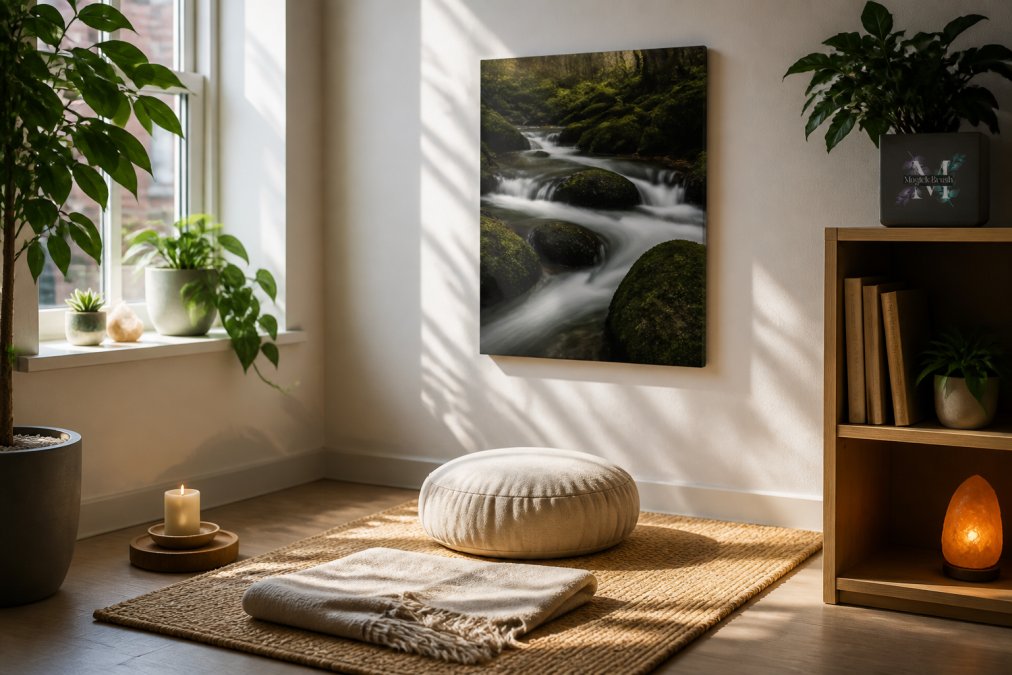
Where you hang your nature photography matters as much as what you choose. In meditation spaces, the photograph should be positioned where your eyes naturally rest during practice, typically at eye level or slightly above when you're seated.
Size creates psychological impact. A small photograph on a large wall can feel lost and diminished. A generously sized piece commands attention and creates a sense of immersion. For meditation rooms, consider pieces that are substantial enough to feel like a presence in the space, not necessarily wall-covering size, but large enough that you're genuinely looking at the photograph rather than just noticing it.
Lighting transforms everything. Natural light creates constant variation throughout the day, sometimes flattering, sometimes harsh.
Creating Your Sanctuary: From Small Spaces to Dedicated Studios
Maintaining Your Photography Investment for Long-Term Presence
Fine-art nature photography is created to last. Museum-quality archival prints, premium canvas, and acrylic glass presentations are designed for durability, but they do require basic care to maintain their presence and appearance over years and decades.
Frequently Asked Questions
How does nature photography actually reduce stress in a meditation space?
Nature imagery can support a calming response. When you view calming nature photography during meditation, your nervous system can be encouraged to relax. This happens because the brain recognizes natural scenes as safe environments. High-resolution prints with fractal patterns, like those found in leaves, water, and landscapes, can be effective at inducing this response, making them ideal focal points for meditation rooms.
What makes nature photography different from other wall art for meditation spaces?
Nature photography creates an emotional connection to the natural world while anchoring your meditation practice. Unlike abstract art, nature imagery provides a visual anchor that supports sensory grounding and mindfulness. The depth and detail in fine-art nature photography, particularly pieces that capture subtle movement like butterfly wings or curling leaves, invite the eye inward and support the meditative state. This intentional visual presence transforms a generic room into a therapeutic environment designed for healing and reflection.
How do I choose the right nature images for my meditation practice?
Select images that resonate emotionally and reflect your personal wellness goals. Soft, organic subjects like butterflies, botanical details, and serene landscapes tend to support calm more effectively than dramatic or high-contrast scenes. Consider the color palette: blues and greens promote tranquility, while earth tones ground the space. Look for photography with emotional depth and a story behind it, pieces created with intention for healing spaces rather than generic stock images. Test how an image makes you feel before committing; your intuitive response is the best guide.
Can nature photography work in a small space or modern minimalist home office?
Yes. Nature photography complements minimalist design because it adds visual interest and emotional warmth without clutter. A single well-chosen piece becomes a focal point that grounds the space and reduces visual fatigue during long work sessions. In small spaces, consider acrylic glass or aluminum finishes for a contemporary look that feels intentional rather than spiritual. The key is selecting one or two pieces that resonate with you personally, quality and presence matter more than quantity, making nature photography ideal for compact, intentional interiors.