

Find Meaningful Nature Art for Your Small Apartment Sanctuary
Table of Contents
- Why Nature Art Matters in Small Spaces
- Understanding the Emotional Impact of Nature Art
- How to Create a Sanctuary at Home Through Intentional Art Selection
- Finding Nature-Inspired Wall Art for Small Spaces
- Practical Steps to Curate Your Sanctuary
- Sourcing Art on a Budget Without Compromising Quality
- Making Art Work in Rental Spaces
- Common Mistakes to Avoid When Building Your Sanctuary
- Frequently Asked Questions
Last Updated: October 4, 2026
Why Nature Art Matters in Small Spaces
Creating a sanctuary in a small apartment starts with understanding what nature art small apartment spaces actually need. It's not just decoration. When you hang a piece of meaningful nature-inspired wall art, you're inviting calm, presence, and intention into a space that might otherwise feel cramped or impersonal.
Small spaces demand thoughtful curation. Every piece counts. At Magick Brush, we've learned that the right nature art small apartment pieces don't just fill a wall, they anchor the entire room's energy.
The difference between a room that feels cluttered and one that feels intentional often comes down to this: purposeful art selection. When you choose pieces that resonate with you emotionally, they become focal points that quiet visual noise and invite deeper breath.
Understanding the Emotional Impact of Nature Art
Nature-inspired wall art works on your nervous system in ways that are tangible and real. When your eyes land on a calming landscape or botanical image, your brain registers it as a signal of safety.
The psychology of nature-inspired decor is straightforward: humans are wired to find peace in nature. In small apartments where you might feel confined, art that brings the natural world into your space creates psychological relief.
This is why choosing the right pieces matters so much. A calming aesthetic isn't about matching your furniture.
The emotional presence in each piece you choose becomes part of your daily environment. Over time, these images anchor you. They remind you that beauty and nature matter, even in a small space.
How to Create a Sanctuary at Home Through Intentional Art Selection
Building a sanctuary starts with intention. You're not decorating, you're curating an environment that supports your well-being. This means every piece should serve a purpose: to calm, to ground, or to remind you of something meaningful.
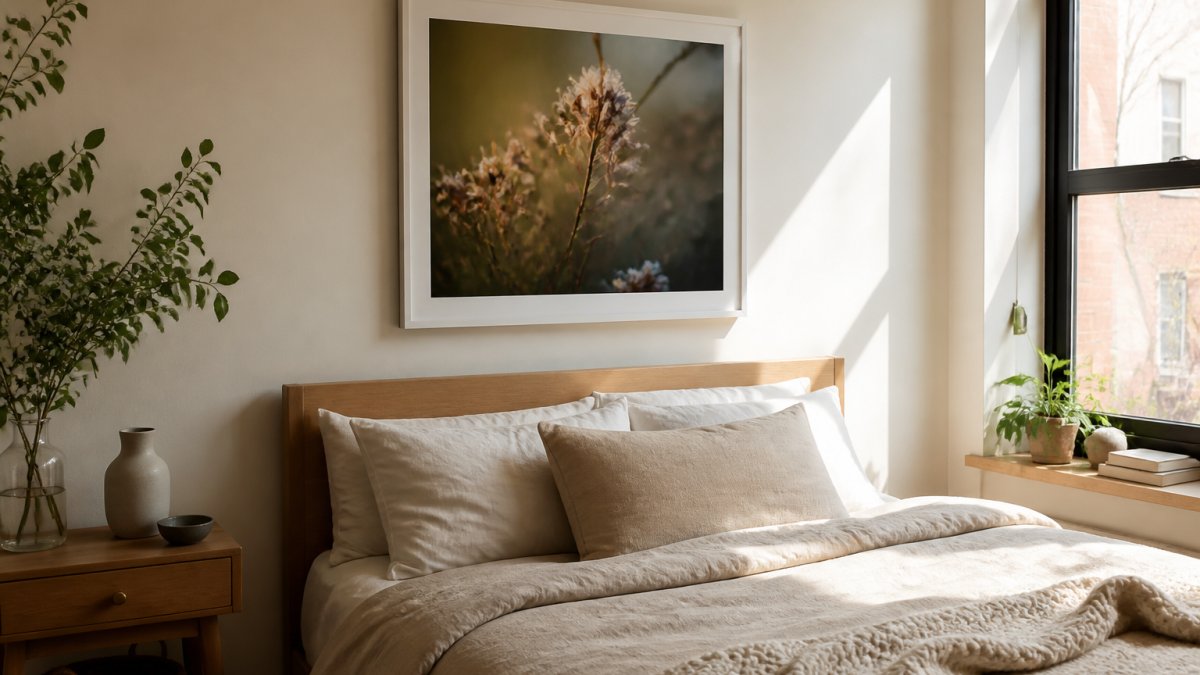
The first step is asking yourself what creates sanctuary for you. Is it botanical growth and renewal? Wildlife moments of stillness? Ink wash paintings that feel meditative? Your answer shapes everything that follows.
A sanctuary isn't about perfection. It's about creating a space where you feel safe enough to rest, reflect, and heal. Nature art becomes the visual anchor for that intention.
Finding Nature-Inspired Wall Art for Small Spaces
The challenge with small apartments is that every piece must earn its place. You can't hide a mediocre painting in a corner. This means your selection process needs to be deliberate.
Start by considering what categories of nature-inspired wall art resonate with you. Different styles create different emotional responses.
Botanical Illustrations and Prints
Botanical illustrations bring quiet intelligence into a space. They celebrate growth, patience, and the intricate beauty of plants. These pieces work especially well in small apartments because they're detailed enough to hold attention without overwhelming the eye.
A piece like The Inward Spiral shows how botanical photography can become meditative. The curling leaf draws your eye inward, creating a sense of reflection and renewal. At $199.99, it's an investment in a piece that will anchor your space for years.

Botanical pieces work best as focal points. Hang them where you'll see them during moments of rest, above your bed, near a meditation corner, or in a reading nook.
Landscape Photography and Wildlife Scenes
Landscape photography brings depth into small spaces. A well-chosen landscape can create the illusion of expanded space, drawing the eye deeper into the image rather than stopping at the wall.
Wildlife scenes, especially moments of stillness, create a different kind of sanctuary. A butterfly at rest. A moment of pause in nature's rhythm. These images remind you that rest is not weakness; it's part of the journey. Monarch's Pause captures this exactly at $159.99.

Wildlife photography works well as a secondary focal point or as part of a layered collection. The key is choosing images that feel grounded and present, not chaotic or overstimulating.
Ink Wash Paintings and Minimalist Approaches
Ink wash paintings and minimalist nature art create breathing room in small apartments. These pieces often use negative space intentionally, which paradoxically makes a small room feel larger and more open.
Minimalist approaches to nature art work because they don't compete for attention. A single fern frond. A branch in winter light. These images invite contemplation without demanding it.
Practical Steps to Curate Your Sanctuary
Curating a sanctuary requires a process. Rushing into art purchases leads to regret. Taking time to think through your choices creates a space that genuinely supports your well-being.
Step 1: Define Your Color Palette and Aesthetic
Before you buy anything, decide what colors and moods you want in your space. Do you want cool, calming blues and greens? Warm earth tones? Soft, muted palettes?
Your color palette shapes how the entire room feels. A nature-inspired piece with colors that clash with your existing space will create visual tension instead of calm.
Write down three colors that make you feel grounded. Then look for nature art that emphasizes those colors. This simple step prevents impulse purchases that don't fit.
Step 2: Choose Your Focal Point
Every sanctuary needs an anchor. This is the piece that draws the eye first. It should be the most meaningful, the most detailed, or the most emotionally resonant piece you choose.
In a small apartment, your focal point might be the only major art piece you hang. That's fine. One powerful piece creates more sanctuary than three mediocre ones.
Your focal point should be somewhere you see it during moments of rest: above your bed, across from your meditation spot, or where you naturally look when you need to pause.
Step 3: Consider Scale and Placement
Scale matters enormously in small spaces. A piece that's too large overwhelms. A piece that's too small gets lost.
A general rule: your focal point should be roughly one-third to one-half the width of the wall or furniture it's above. This creates visual balance without dominating the space.
Placement is equally important. Hang your focal point at eye level when you're sitting, not standing. This invites you into the image rather than forcing you to look up at it.
For renters, consider floating frames or removable hanging systems. You can create a sanctuary without damaging walls.
Step 4: Layer with Complementary Elements
Once your focal point is in place, you might add complementary pieces. But keep this minimal. In a small space, less is always more.
Complementary pieces could include:
- A smaller botanical print in a matching frame
- A nature-inspired textile or tapestry
- Natural elements like stones, shells, or wood
- Ambient lighting that highlights your art
Each layer should enhance the focal point, not compete with it. The goal is a cohesive sanctuary, not a gallery.
Sourcing Art on a Budget Without Compromising Quality
Creating a sanctuary doesn't require spending thousands. It requires intention and patience.
Start by deciding what you can realistically spend. Then look for pieces within that budget that genuinely move you. A $159.99 piece like Fernlight offers museum-quality archival printing and original fine-art photography, far more value than generic wall art at similar prices.

Budget-friendly sourcing strategies:
- Invest in one quality focal piece rather than multiple cheaper pieces
- Look for artists who offer prints rather than only originals
- Choose unframed options and frame them yourself if you're handy
- Follow artists whose work resonates with you and purchase during sales or promotions
- Consider prints on canvas or metal as alternatives to framed prints
Quality matters because you'll live with these pieces daily. A cheap print that fades in six months costs more in the long run than a museum-quality print that lasts decades.
Making Art Work in Rental Spaces
Renters often feel limited in how they can personalize their spaces. But nature art is one of the most renter-friendly decor choices you can make.
Here's why: you don't need to paint walls or make permanent changes. A single piece of meaningful nature-inspired wall art transforms a rental apartment into a sanctuary.
Hanging options for renters:
- Command strips and damage-free hooks (hold up to 16 pounds)
- Floating frames that don't require wall anchors
- Leaning art against walls for a gallery-style look
- Tapestries and textiles that hang from tension rods
- Easels that display art without any wall commitment
The beauty of nature art in rental spaces is that it's portable. When you move, your sanctuary moves with you. You're not creating a permanent installation; you're creating a personal environment that reflects your values.
Many fine-art prints come in multiple formats designed for flexibility. Midnight Visitor at $209.99, for example, is available as a fine-art print, canvas, acrylic glass, or metal, each offering different hanging options suited to rental situations.
Common Mistakes to Avoid When Building Your Sanctuary
Most people make predictable mistakes when creating a sanctuary in small spaces.
Mistake 2: Hanging too many pieces at once. The urge to fill walls is strong. Resist it.
Mistake 3: Buying before you've thought about placement. Measure your walls. Look at your space from different angles.
Mistake 4: Ignoring scale and proportion. A huge piece in a small room creates tension.
Mistake 5: Treating art as temporary. If you're going to invest in nature art, choose pieces you genuinely love.
Mistake 6: Forgetting about lighting. Great art needs light to shine.
The most common mistake of all: waiting for the perfect moment to create your sanctuary. Start now.
At Magick Brush, we create fine-art photography specifically designed for this purpose. Each piece, from The Inward Spiral to Monarch's Pause, is crafted to anchor your space and invite a deeper sense of presence.
Frequently Asked Questions
How do I choose nature art that feels personal and meaningful to me?
Start by identifying what draws you emotionally, butterflies, botanical forms, landscapes, or wildlife scenes. Notice which colors calm you and which subjects make you pause. Meaningful art often reflects where you are in your personal journey. Consider pieces that resonate with your healing intentions or spiritual practice. Fine-art photography like those from Magick Brush connects you to the artist's intention behind each image, adding depth beyond aesthetics. Spend time with images before committing; your intuition will guide you toward what truly resonates.
What should I look for when buying fine-art photography for a small space?
Prioritize quality of materials and archival standards, museum-quality prints preserve their beauty over time. Consider the emotional tone: does it invite calm or inspire grounding? For small spaces, look for pieces with depth and perspective that create visual interest without overwhelming. Single-subject compositions (like botanical close-ups or a solitary butterfly) work better than busy scenes. Premium finishes such as acrylic glass or aluminum dibond can enhance the piece's presence in intimate spaces. Verify the artist's story and intention; knowing the meaning behind the image deepens its impact.
How does nature-inspired art contribute to a sense of sanctuary?
Nature art activates biophilic design, our innate connection to the natural world, which reduces stress and invites presence. A meaningful piece becomes a visual anchor that draws your attention inward, supporting meditation and reflection. Art depicting growth, renewal, or stillness (like botanical illustrations or butterfly imagery) reinforces the psychological grounding your sanctuary needs. Each time you pause to look at the piece, you reconnect with calm and intention. Over time, the space itself begins to feel like a refuge because the art consistently reminds you of peace, presence, and the quiet wisdom of nature.
Can I create a meaningful sanctuary in a rental apartment?
Absolutely. Renter-friendly options include unframed fine-art prints that lean against walls, canvas prints that hang with removable adhesive strips, and pieces in lightweight aluminum dibond that won't damage walls. Focus on a single powerful focal point rather than covering all walls. Botanical illustrations and landscape photography work beautifully in rentals because they're timeless and portable. The sanctuary is about intention and presence, not permanence. When you move, your carefully chosen pieces move with you, growing your sanctuary across spaces. Many artists, including Magick Brush, offer multiple format options designed for flexibility and temporary display.