

Fine Art Nature Photography for Home Decor
Table of Contents
- Understanding Fine Art Nature Photography for Home Decor
- How to Choose Wall Art for Home Decor: A Framework for Selection
- The Benefits of Nature Photography in Interior Design
- Fine Art Photography Investment: Value Beyond Aesthetics
- Comparing Approaches: Intentional Curation vs. Mass Production
- Integrating Fine Art Photography Into Different Spaces
- What Makes Authentic Fine Art Photography Different
- Frequently Asked Questions
Last Updated: October 1, 2026
Understanding Fine Art Nature Photography for Home Decor
Fine art nature photography represents a deliberate shift away from mass-produced wall decor toward intentional, emotionally resonant imagery. Unlike generic prints designed to match any aesthetic, fine art nature photography captures the unseen moments and subtle intelligence of the natural world. This approach transforms a room from a blank space into a sanctuary that reflects who you are and what matters to you.
At Magick Brush, we understand that the art you live with shapes how you feel in your own space. When you choose fine art nature photography for your home, you're not just decorating. You're making a statement about what brings you peace, what grounds you, and what kind of environment you want to inhabit. A carefully selected landscape or botanical image can soften a room's energy, anchor your eye, and invite a deeper breath every time you look at it.
The difference between intentional curation and mass production runs deeper than aesthetics. It's about authenticity, artistic vision, and the relationship between the artist's intention and your own emotional response. According to the Smithsonian Institution's research on art and wellness, exposure to fine art can reduce stress and increase feelings of calm in domestic spaces. This isn't coincidence. It's the result of thoughtful composition, technical mastery, and emotional presence captured in a single frame.
How to Choose Wall Art for Home Decor: A Framework for Selection
Selecting fine art nature photography for your home requires more than liking how something looks online. It demands intentionality about what you want your space to communicate and how you want it to make you feel.
Emotional Resonance and Visual Storytelling
The first question to ask yourself is simple: Does this image make me pause? Does it invite a deeper breath?
Fine art nature photography that works in your home operates on emotional presence, not just visual appeal. The best pieces tell a story through composition, lighting, and the artist's interpretation of a moment in nature. When you're evaluating a photograph, look for images that create a sense of narrative. A pathway that seems to lead somewhere meaningful. A bloom captured in a moment of becoming. Flowers emerging from shadow like quiet companions.
This emotional resonance is what separates fine art from decoration. A decorative piece matches your color scheme. A fine art photograph changes how you experience your room. It becomes a visual anchor that supports your emotional well-being, especially in spaces dedicated to rest, creativity, or healing.
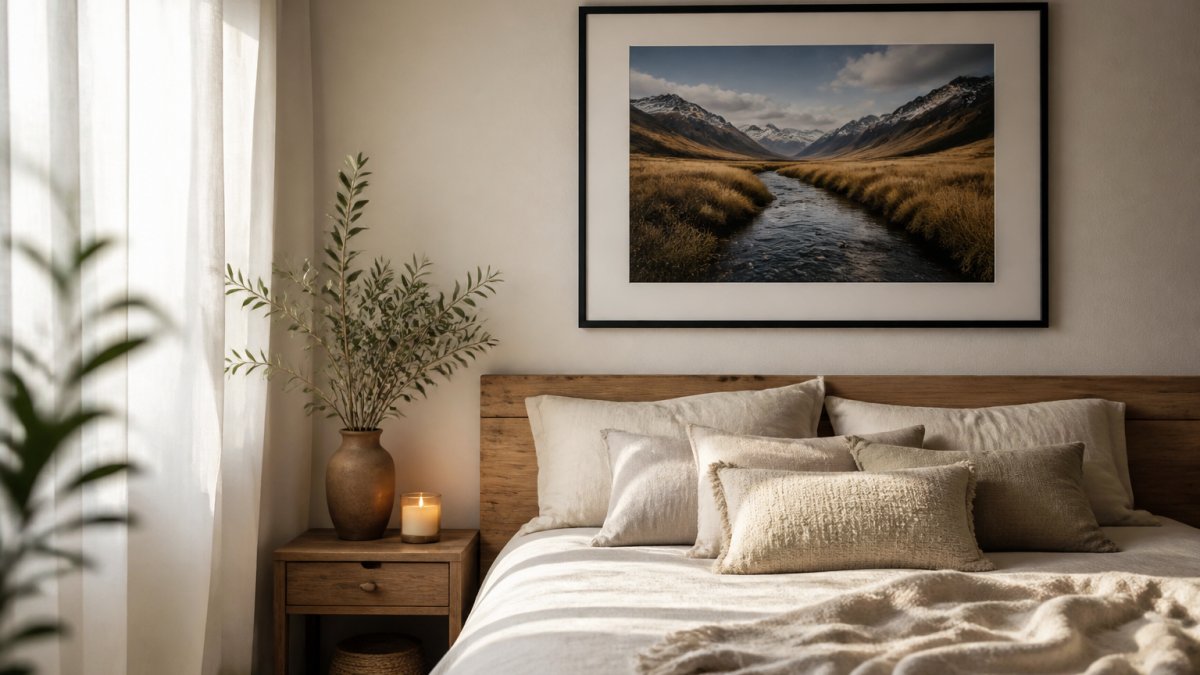
Consider where you'll place the piece and what you want it to do there. A meditation room calls for images that invite stillness and introspection. A creative studio needs work that sparks energy and possibility. A bedroom sanctuary benefits from photography that feels intimate and grounding.
Technical Quality and Print Standards
Once you've identified an image that resonates emotionally, examine the technical execution and print quality. This matters more than many people realize.
Museum-quality archival printing preserves the depth, detail, and emotion of the original artwork for decades. Look for fine art prints that use archival matte paper or premium materials like aluminum dibond. These formats ensure color accuracy, longevity, and the ability to display the photograph without glass glare that can diminish the viewing experience.
The resolution and post-processing of the original photograph also matter. Fine art nature photography requires technical skill in composition, lighting, and color accuracy. The artist's choices in post-processing determine whether the final print captures the mood and intention of the original moment. A well-executed fine art print reveals layers of detail and texture that reward repeated viewing.
The Benefits of Nature Photography in Interior Design
Nature photography serves a specific function in interior design that goes beyond aesthetics. Research from the American Psychological Association on biophilic design shows that imagery of natural environments reduces stress and supports emotional well-being in indoor spaces.
When you integrate fine art nature photography into your home, you're creating what designers call a biophilic connection. Your eye has something meaningful to rest on. Your nervous system responds to natural imagery with calm. The space feels intentional because it reflects a conscious choice about what belongs there.
This is particularly valuable in spaces where you spend significant time. A home office that includes a grounding landscape photograph creates a more peaceful work environment. A bedroom adorned with subtle botanical imagery supports better sleep and deeper rest. A meditation room anchored by fine art nature photography becomes a true sanctuary for reflection.
The visual impact of a single well-chosen piece can transform an entire room. It softens corners, draws the eye, and reminds you that beauty and presence matter. This is why intentional curation produces such different results than filling walls with generic decor.
Fine Art Photography Investment: Value Beyond Aesthetics
Purchasing fine art nature photography is an investment on multiple levels. There's the immediate value of living with an image that brings you joy and supports your emotional well-being. Then there's the longer-term consideration of artistic and monetary value.
Unlike mass-produced prints, authentic fine art photography created by a recognized artist holds value. Limited edition prints, original artist work, and pieces created with intention tend to appreciate or at least maintain their value over time. This is especially true for photography that captures a unique artistic vision and technical mastery.
When you buy fine art nature photography, you're also supporting an artist's vision and craft. You're choosing work that required skill, sensitivity, and intention to create. This matters if you care about authenticity and want your space to reflect genuine artistic expression rather than commercial design.
The investment perspective also encourages you to be more thoughtful about your choices.
Comparing Approaches: Intentional Curation vs. Mass Production
The distinction between intentional curation and mass production shapes everything about the final result you experience in your home.
| Aspect | Mass Production | Intentional Curation |
|---|---|---|
| Artistic Vision | Generic, designed for broad appeal | Artist-driven, emotionally specific |
| Print Quality | Standard commercial printing | Museum-quality archival materials |
| Emotional Impact | Decorative, surface-level | Deep, personal resonance |
| Longevity | Fades or feels dated quickly | Appreciates in meaning and value |
| Investment | Minimal | Grows or maintains value |
Integrating Fine Art Photography Into Different Spaces
Fine art nature photography works differently depending on where you place it. The key is matching the piece's emotional tone and visual energy to the space's purpose.
Wellness Spaces and Meditation Rooms
Meditation rooms and wellness spaces call for fine art nature photography that invites stillness. Look for images that feel grounding and peaceful. Landscapes with gentle pathways. Botanical close-ups that encourage you to slow down. Black and white photography that emphasizes structure and shadow. These pieces should make you want to pause, breathe, and turn inward.
Creative Studios and Home Offices
Creative spaces benefit from fine art nature photography that sparks energy and possibility. Joy Refuses Stillness brings exactly this quality. An orange flower dancing beyond its own edges communicates movement, spontaneity, and the kind of joy that cannot be arranged neatly. This piece belongs in a space where you want to feel alive and engaged.
Bedrooms and Personal Sanctuaries
Bedrooms call for fine art nature photography that feels intimate and restorative. This is your private sanctuary, so choose work that speaks directly to you. The Art of Becoming captures an unfolding bloom with rounded layers that hold possibility without rushing toward completion. This piece brings patience and hope into a space, especially for anyone standing at the beginning of something new.
What Makes Authentic Fine Art Photography Different
Authentic fine art nature photography created by a recognized artist carries qualities that mass production cannot replicate. The work reflects the artist's unique vision, technical mastery, and emotional presence.
Frequently Asked Questions
What should you look for when buying fine art nature photography for your home?
Prioritize emotional resonance first: does the image draw you in and create the feeling you want in that space? Check for museum-quality printing standards including archival materials, color accuracy, and proper resolution. Consider the artist's story and intent behind the work. Evaluate how the piece's composition, lighting, and subject matter complement your room's existing aesthetic and your personal values. Finally, verify that the work is original fine art photography by the credited artist, not stock imagery.
Is fine art nature photography a good investment for home decor?
Fine art photography serves dual purposes: it enhances your immediate environment while building lasting value. Original works by established artists who create intentional, story-driven pieces tend to hold or appreciate in value over time, especially when printed on archival materials. Unlike mass-produced decor that depreciates, fine art photography becomes more meaningful as your connection to it deepens. The investment extends beyond monetary value to the emotional and spiritual anchoring it provides to your space.
How does nature photography impact home interior design?
Nature photography brings grounding energy and visual calm to any room. It softens hard architectural lines, creates focal points that draw the eye, and establishes a sense of presence and intentionality in the space. Fine art landscape and botanical imagery encourages slower looking, inviting viewers to pause and breathe. This creates what designers call spatial aesthetics, where the art doesn't just decorate but fundamentally shifts how people feel in the room. For wellness-focused spaces, nature photography anchors healing intentions and supports emotional well-being.
What is the difference between mass-produced prints and fine art photography?
Mass-produced prints use generic stock imagery, lower-quality paper, and non-archival materials that fade over time. Fine art photography is created by individual artists with intentional vision, printed on museum-quality archival paper or premium finishes, and designed to preserve detail and emotional depth for decades. Fine art works carry the artist's story and technical skill, post-processing, compositional choices, and lighting decisions that transform a moment into meaningful visual storytelling. Mass production prioritizes volume and cost; fine art prioritizes presence and longevity.