

Can You Improve Home Air Quality on a Budget?
Last Updated: November 4, 2026
Quick Summary
You can improve home air quality on a budget by starting with free source control, then adding daily ventilation and a DIY box fan filter built for about $35. Source control costs nothing and beats every gadget you can buy, so remove chemical cleaners, scented candles, and other pollution sources first.
- Store paints, solvents, and glues in a sealed bin in the garage to cut indoor pollution.
- Crack two windows on opposite sides of the house for cross-flow ventilation each day.
- Build a DIY box fan filter with a 20-inch fan and a MERV-rated furnace filter.
- Seal all four edges of the filter with tape so air cannot slip around it.
- Take shoes off at the door to cut tracked-in dust and pollen.
Table of Contents
- Start With the Free Fix: Source Control
- Best Practices for Indoor Air Ventilation
- Natural Air Purifiers for Home: What Works and What Doesn't
- Build a DIY Box Fan Filter for About $35
- Signs of Poor Indoor Air Quality You Shouldn't Ignore
- Low-Cost Habits That Protect Your Home Air Quality
- Create a Calmer Space While You Clean the Air
- Frequently Asked Questions
Start With the Free Fix: Source Control
The cheapest way to improve home air quality is to stop pollution at its source. The Environmental Protection Agency names source control as the first of three main strategies for cleaner indoor air, alongside ventilation and filtration (the EPA). It costs nothing, and it beats every gadget you can buy.
Most people skip this step. They buy a purifier and keep the chemical cleaners, the scented candles, and the dusty carpets. That is like mopping a floor while the tap is still running.
Here is what source control looks like in practice:
- Store paints, solvents, and glues in a sealed bin in the garage
- Swap aerosol sprays for pump bottles or a damp cloth
- Skip synthetic air fresheners and scented candles
- Vent the stove hood every time you cook
- Wipe up mold on bathroom grout before it spreads
A common mistake is chasing a "clean" scent. Fragrance products add volatile organic compounds to your air instead of removing anything. Plain soap and water do more for a room than a plug-in ever will.
Best Practices for Indoor Air Ventilation
Fresh air is free, and most homes do not get enough of it. Opening doors or windows each day brings in outside air and helps flush out trapped pollutants. That is a starting point, not a complete plan. The practical question is whether a given room actually exchanges its air, and most homes have no idea.
Ventilation matters most in small, sealed rooms. Kitchens, bathrooms, and bedrooms hold the highest levels of moisture and airborne contaminants. Run the exhaust fan while you cook and for a few minutes after. Do the same after a shower.
A few habits that make a real difference:
- Crack two windows on opposite sides of the house for cross-flow, ideally on different floors so stack effect pulls air through
- Run the exhaust fan during and after cooking, and check that it actually moves air by holding a tissue against the grille
- Open a window while you clean, paint, or use any solvent
- Change HVAC filters on schedule and keep supply and return vents unblocked by furniture or rugs
- Leave interior doors open for a few hours a day so air can move between rooms
Watch out: sealing a home too tightly traps moisture and mold spores, and it can backdraft combustion appliances. If you have a gas water heater or furnace in a sealed utility closet, confirm it has its own combustion air supply before you tighten the envelope.
On high-pollen days, during wildfire smoke events, or when outdoor ozone is high, open-window ventilation can make indoor air worse. In those stretches, it is better to keep windows closed.
Mechanical ventilation, briefly. Newer tight homes often rely on a balanced system such as an energy recovery ventilator or heat recovery ventilator, which brings in fresh air while tempering it against the outgoing air. Retrofitting one is not a budget project, but a single-room version can be worth pricing if a bedroom has no operable window. For most renters and older homes, the free moves above come first.
Natural Air Purifiers for Home: What Works and What Doesn't
Houseplants are often oversold as an air quality fix. Real rooms do not work like sealed chambers, so their effect on air is limited.
That said, plants still earn a place. They add humidity, soften a room, and give your eye somewhere calm to rest. Treat them as a mood boost, not a purification system.
What actually works for natural air purifiers for home:
-
Plants: modest help with humidity and morale, not a filter replacement
-
Open windows: the most effective "natural" purifier you own
If plants are part of your plan, choose ones that suit your light and your schedule. Our guide to best indoor plants for a relaxing home walks through options that thrive indoors without constant fuss.
Build a DIY Box Fan Filter for About $35
A DIY box fan filter is a budget-friendly option for air cleaning. The part that decides whether it works is filter rating, fit, and safe operation.
Here is the build:
- Buy a 20-inch box fan and a MERV-rated furnace filter sized to the fan's back
- Cut cardboard to frame the filter on three sides
- Tape the filter to the back of the fan, arrows pointing toward the fan
- Seal the edges with tape so air cannot slip around the filter
- Run it on low or medium in the room you use most
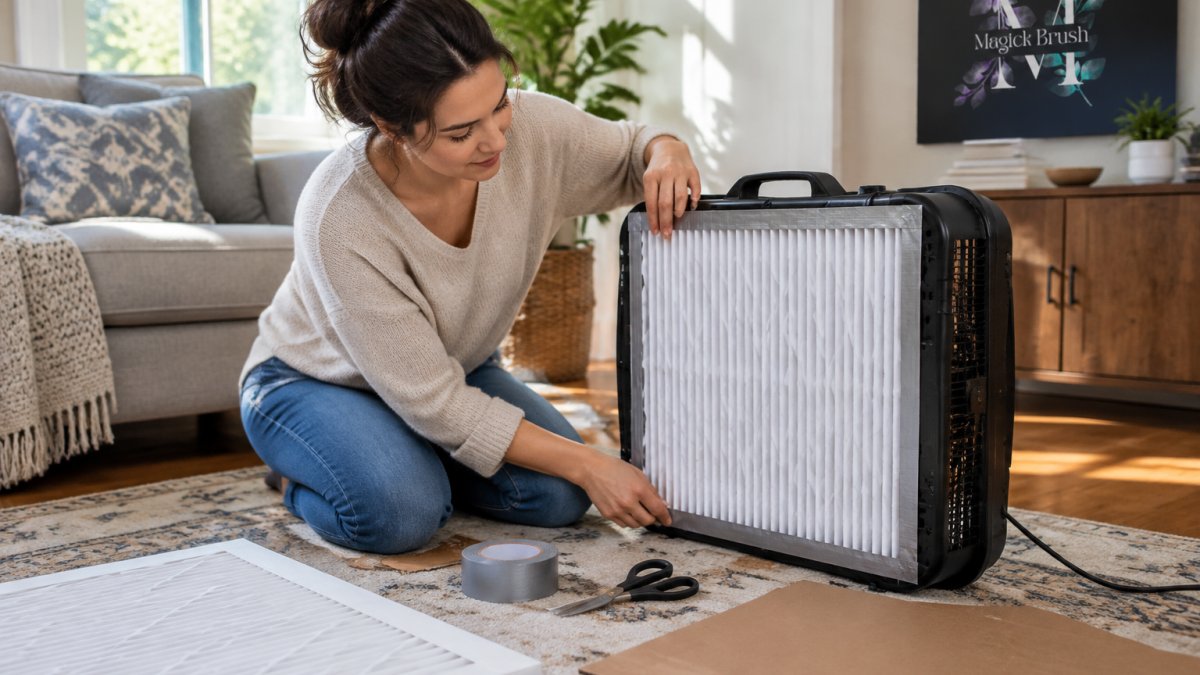
Seal the edges, not just the face. The most common failure is air slipping around the filter instead of through it. Run tape along all four edges where the filter meets the fan housing, and check the seal by feeling for leaks with the fan on low.
Run it where you breathe. A box fan filter cleans the room it sits in, not the house. Put it in the bedroom overnight and the living room during the day. Keep it a few feet from walls and furniture so it can pull air freely.
What to expect. A single box fan filter will not handle a whole house. For one room and one budget, it can be a practical option. If you want a step up without a full purifier, a second fan in the bedroom is usually the best next dollar spent.
Here is the build at a glance, from parts to placement.
| Step | What to do |
|---|---|
| 1 | Buy a 20-inch box fan and a MERV-rated furnace filter |
| 2 | Cut cardboard to frame the filter on three sides |
| 3 | Tape the filter to the back, arrows pointing toward the fan |
| 4 | Seal all four edges with tape so air cannot slip around |
| 5 | Run it on low or medium in the room you use most |
Signs of Poor Indoor Air Quality You Shouldn't Ignore
Your body often reports bad air before any monitor does. The signs of poor indoor air quality tend to show up as patterns, not one-off symptoms.
Watch for these signals:
- Headaches or fatigue that ease when you leave the room
- Stuffy nose, sneezing, or itchy eyes at home but not elsewhere
- Condensation on windows or damp patches near vents
- A musty smell that returns after cleaning
- Dust settling on surfaces within a day or two
Smoke and carbon monoxide detectors belong on this list too. Testing detectors and replacing batteries regularly is a sensible safety habit.
If symptoms persist, talk to a doctor. This article covers home habits, not medical advice.
Low-Cost Habits That Protect Your Home Air Quality
Small routines beat big purchases over time. Research from MIT's study of air quality in affordable housing tracked gas pollutants and particulate matter inside occupied apartments, and it confirms what many families suspect: everyday indoor sources drive exposure far more than outdoor air.
The habits that pay off:
- Take shoes off at the door to cut tracked-in dust and pollen
- Vacuum weekly with a HEPA filter if you have one
- Wash bedding in hot water to reduce dust mites
- Keep indoor humidity in check with fans and open windows
- Dust with a damp cloth instead of a dry rag
- Run the kitchen fan every time you cook
Pet owners need one extra step. Brush pets outdoors, wash their bedding often, and keep a filter running in the room where they sleep. Pet dander is sticky and lingers in soft surfaces.
For seasonal shifts, adjust. Pollen season calls for closed windows and filtration. Winter dryness calls for a little humidity. Spring cleaning is the moment to wash curtains and vacuum behind furniture.
Create a Calmer Space While You Clean the Air
Cleaner air changes how a room feels. The same is true of what hangs on the walls. A calm space supports the breathing and rest that better air makes possible.
Biophilic design, the practice of bringing natural elements indoors, links to lower stress and better mood. You can see that principle at work in our piece on the benefits of biophilic design for mental health. Pair it with a few practical moves and your home starts to feel like a retreat.
Try this:
- Clear one corner of clutter and let it breathe
- Add a plant with soft, rounded leaves
- Hang art that pulls your eye toward something quiet
- Set up a small meditation space with a cushion and low light
At Magick Brush, our fine-art photography is made for exactly this moment. Each piece is created by artist Erin D'Elia to anchor a room and invite a deeper breath. The nature-inspired collections, from Butterfly to Thresholds & Tides, turn a plain wall into a point of presence rather than decoration.
If you want the full picture, our guide to creating a home sanctuary walks through the room-by-room steps. Clean air and intentional art work on the same goal: a home where you can rest and reset.
Frequently Asked Questions
What are the common signs of poor indoor air quality?
Watch for stale or musty smells, visible dust settling quickly after cleaning, condensation on windows, and recurring headaches or throat irritation when you're at home. Checking that smoke and carbon monoxide detectors are tested and their batteries replaced regularly is part of a sound indoor air safety routine. If symptoms fade when you leave the house and return when you come back, that pattern is worth investigating with better ventilation and source control.
How can I improve my home air quality on a budget?
Start with the free steps first. Start with source control: seal or remove the things producing pollutants before buying anything. Then open doors or windows regularly to bring in fresh air. If you want filtration, a DIY box fan filter is one budget-friendly option.
Do houseplants actually improve indoor air quality?
Houseplants add calm and a connection to nature, but their air-cleaning effect is small compared with ventilation and filtration. A handful of plants in a closed room won't meaningfully change pollutant levels. Treat them as a complement to the basics, not a replacement. If you want plants in your space, choose low-maintenance varieties and keep their soil from staying soggy, since damp potting soil can encourage mold growth that works against your home air quality goals.
How often should I run a DIY box fan filter?
Run it when you need it most: during wildfire smoke events, high pollen days, or while cooking and cleaning. Public Health Insider notes these DIY builds are designed to reduce specific types of air pollution, so they're a targeted tool rather than a whole-home solution. Keep the filter clean and replace it when it looks gray or clogged, and pair the fan with source control and daily ventilation for the best results.
Better air starts with one free change today, whether that is opening a window or moving the solvents out of your living space. Magick Brush can help you finish the job with fine-art photography that softens a room and anchors the eye. Browse the collections, find the piece that makes you exhale, and turn your clean, calm space into a true sanctuary. Continue shopping and bring home a little wonder.
